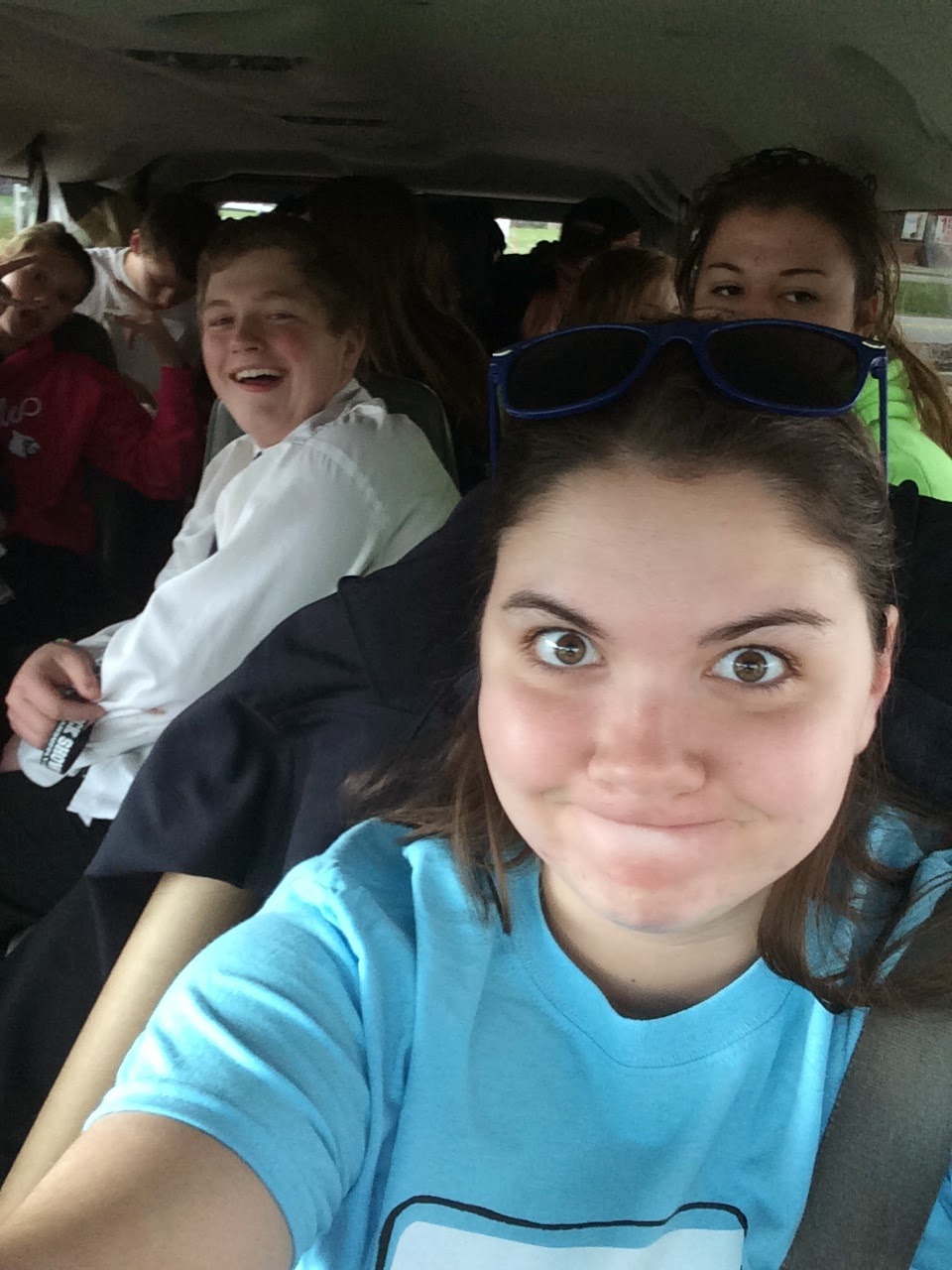
Can you guess where this is going? Don't worry I couldn't either. Since we are lab #1 there wasn't anyone to spoil the surprise.
So we hopped in the van with our lesson plans and headed over to the dollar tree, Penn State was kind enough to give us each 5$ to find supplies we can use in a lesson(s) of our choice to help make them more creative. At first I was a little stumped about where I could add creativity...than it hit me. In my pesticide education unit! My first lab I was going to have students identify characteristics of pest but wouldn't it be cool if students designed their own pest!?!
So I bought cotton balls, googly eyes, string, mini cup cake holders, and q-tips. Now can you build a pest out of these things? I think you could, using the cup cake holders or cotton balls to make the body and segments, the q-tips as support and the eyes well...that speaks for its self and finally the string could be used for wings, legs, or other body parts.
I know we all say we struggle with creativity but in this day and age we have access to so many resources that can help add that creative spark to our classroom, lesson, unit or day. I know I struggle with creativity but I know where to reach out and find the support I need to get that spark!
One great resource is Pinterest! I have my own account and use it in so many ways! So if you are in a rut check out my page or the awesome Teach AG! page!
Monday, December 15, 2014
Do you have a problem???
Problems based learning...or PBL as we like to call it (at least I do) can often be confused with project based learning and inquiry based learning. So I'm here to try and clear the space but in case I don't do a good enough job check out this awesome site that breaks down problems based learning and inquiry learning.
Now back to problems based learning, in lab I presented a problem to my students with a solution in mind. This is the key to problems based learning, only one end result. Our problem was presented through a video where a community member had some sort of pest eating her tomato plants. It was up to our class to help here. Since lab is a little different than the classroom I had to make some modifications, in the classroom I would have students as bell work create 5 questions they would need to ask and than we would skype in our community member who would present the information she could ( I would script it for her) and than the students could ask any additional questions they felt they needed to solve the problem of the mystery bug.In lab students were presented a hand out with some background and than they were asked to research what pest they believed was affecting the tomato plant. (This is what day two of my class would be). After students picked their pest they created a mind map of how the pest got to the tomato plant, lack of nutrients, poor pH, to much water ect. I found the mind map to be really fun and helpful for the lab students to show why and how the pest got to only the tomato plants!
Lab went a little smoother than some of my past labs I did state my objectives, I moved around the room and tried to give each group equal attention, I thought I had a strong presence. However, I still lack the confidence, time management, and the lesson plan writing skills. I know however I am going to improve in these areas and with that I will become a strong confident agricultural educator who is set out to change the world! What does Inquiry mean to you?
I can tell how labs are only improving my teaching skills, this week we had to write a lesson that was inquiry. Now what does inquiry mean to you? I can tell you what it means to me...inquiry is where you give students the skill set and knowledge to take what you give them, identify the problem and than create a solution. For lab I created a lesson titled How much is to much? This lesson focus on economic threshold and field scouting, I have a 6 week long unit on Pesticide Education and I chose to try inquiry in one of them. Now inquiry doesn't have to be full blown inquiry. And that is something I struggle with and I know many of my peers do as well. However we have gained a lot of experience and tools to help us inquiry and to help us teach our own students to inquire.
To set up my students I gave them a lab packet, scales, and cups of raisins... can you guess what they were about to do? We started of reviewing from the previous class where we talked about beneficials and pests which led nicely into how a large population of a benefical such as a lady bug is a bad thing making them a pest. Next students worked in groups to weight the cups of raisins and to record their data, using this data we analyzed an article on economic threshold to determine if we had reached our threshold in our plot of soybeans. It didn't go as smoothly as I had planed however, I believe the students got the idea and I gained a better understanding of inquiry based learning.
Now lets look at what I should have improved on...
As the semester is winding down we are only gaining more experience and opportunities to jump in front of the classroom. I look forward to getting rid of my bad habits and gaining confidence to get out there and teach!
To find out more about inquiry check out this page it helped me figure out the differences as well as ways to improve my lesson plans!
Also check out this rubric ( great huh!?) it shows that your lesson doesn't have to be 100% inquiry but can start from more teacher centered than move to student centered
To set up my students I gave them a lab packet, scales, and cups of raisins... can you guess what they were about to do? We started of reviewing from the previous class where we talked about beneficials and pests which led nicely into how a large population of a benefical such as a lady bug is a bad thing making them a pest. Next students worked in groups to weight the cups of raisins and to record their data, using this data we analyzed an article on economic threshold to determine if we had reached our threshold in our plot of soybeans. It didn't go as smoothly as I had planed however, I believe the students got the idea and I gained a better understanding of inquiry based learning.
Now lets look at what I should have improved on...- I need to work on stating my objectives at the beginning and ending of class
- I need to be more enthusiastic and gain a strong presence through confidence
- I need to improve on my clarity of instructions
- I need to make sure all parts of my lab handout print on all lab books (oops)
- I also need to improve on my mobility around the classroom
As the semester is winding down we are only gaining more experience and opportunities to jump in front of the classroom. I look forward to getting rid of my bad habits and gaining confidence to get out there and teach!
To find out more about inquiry check out this page it helped me figure out the differences as well as ways to improve my lesson plans!
Also check out this rubric ( great huh!?) it shows that your lesson doesn't have to be 100% inquiry but can start from more teacher centered than move to student centered
Friday, November 14, 2014
Observations from National Convention
National convention was a few weeks ago and over this time I had the chance to look back at what I observed and look at my notes from the week. On the Friday before we left we had a lesson on "tracking" tracking in this sense isn't referring to looking for that big buck but rather looking at what is going on around you. I used this new skill to observe the interactions between those around me and how my student's interacted with each other and those around them. I was really surprised about a few things
I will use these hints I picked up through tracking to gauge how some students are more outgoing where others are less outgoing. I hope to help build the confidence in those who wouldn't ask for signatures and help those who do fine tune their people skills
- My students treated each other with a high respect, being that they are officers I would expect tension between them however between the officer team I didn't feel any tension only respect for each other and their abilities.
- I was surprised how much different it is having an adviser pin, from going into workshops to talking to those at the booth. In some booths if you mentioned the word student teacher they just blew you off where others were willing to help and lend a hand.
- The respect students had for the National Officers and the sessions was really high, thinking back to high school I remember not being interested in workshops or sessions or thinking much about National Officers, the students I worked with were excited for sessions workshops and meeting the National Officers
I will use these hints I picked up through tracking to gauge how some students are more outgoing where others are less outgoing. I hope to help build the confidence in those who wouldn't ask for signatures and help those who do fine tune their people skills
Tuesday, November 11, 2014
Blogs, blogs, blogs and more blogs
Blogging is something I haven't explored until this past semester, and to be honest I'm not sure if I would have started one on my own. But now since I have been blogging, have seen the impact not only I have made (I have blog views in Poland, Germany, and South Africa as well as the US) but also the impact it has made on me as a future educator. Having the chance to blog has allowed me to explore different readings and reflect upon them and bring them down to earth and into my future classrooms. It has also given me the chance to start working on my creativity, writing, as well as a chance to express myself in a professional fashion. Blogging is a powerful tool and I have decided to see how you can use this tool effectively and efficiently in a classroom. When giving students the chance to express themselves you are gaining an opportunity to get to know more about them. You are also giving them the opportunity to learn more about their peers. I feel that a blog can be very powerful and useful as long as you follow a few key tips.
- Make sure you build up your students, first have them "write" blogs but don't publish them. Once you have refined key skills turn 'em lose.
- Make sure you set clear guidelines- when students know whats expected of them, they can achieve it
- Gives students a chance to collaborate with one another on a few topics
- Continuously give students higher expectations, maybe require video links, more photos, or commenting on others blogs outside of the classroom
- Encourage students to comment on each others blogs and get the conversation started
- Be sure to give students honest feed back so they may continuously improve their skills
One tool that has been shown to us here at Penn State is Twitter, we were encouraged to create a twitter account and use it. Yeah, we have assignments that say tweet, I may not be so thrilled about this but I know a high school student would be trilled with the opportunity to have a homework assignment saying tweet about your thoughts on what we learned in class. Twitter is seen often as more appropriate in the world of educators because its less secretive than Facebook, I do agree with this. And I guess that is why we all have twitter accounts here at Penn State.
There are so many different ways to use Twitter in the classroom TeacherHub.com has a list of 50 ways to use twitter effectively. A few of my favorites include
- Tweeting out due dates
- Create a hashtag and track it
- Live tweet field trips or exciting activities
- Sync twitter with a blog
- Post sample exam questions
- Summarize
Live tweeting also helps keep everyone in the loop with what is going on and the exciting things you are up to. Its a great way to share a field trip with concerned parents who are uneasy with letting their kids travel. It is also a way administration can see what you and your students are up to out of the classroom. If you have a class blog or require students to keep a blog it is very easy to sync twitter with different blogging platforms. This allows the user to share out a more in depth knowledge and understanding.Twitter can be used to have students tweet at you example exam or quiz questions, this eliminates students who "forget their paper" or can't think of a question in class. Using the class hashtag peers can also review others questions to help them prepare as well.
Twitter can also be a tool that helps students summarize topics in brief sentences of 150 characters or less. So for those who hate writing, I think we can all manage 150 characters!
Now lets get those twitter accounts started and get out students to follow professional organizations and companies and prepare not only ourselves but our students for the 21st century! There are also numerous others platforms for social media out there twitter and blogs are just two forms. Follow Teach AG's pinterst page for more tips on social media and to learn about new and upcoming platforms.
Teacherhub.com
nea.org
edutopia.org
If you have any questions or comments feel free to leave 'em! I appreciate the feedback!
Till next time,
follow me @rachie12rach
Tuesday, November 4, 2014
The adventures of "T-DAWG"
Wow what a week it was...now to reflect on it.
| Stuck in traffic selfie!! |
Now lets not dwell on what ifs but rather what did happen!
| Takin Names and Makin Friends |
| First session, we got front row seats! |
Oh the books! Oh the resources I was able to pick up through out the career fair. Now it's pretty sad when you get excited about a free book you realize that BAM adulthood has struck. I was so surprised with how helpful companies are (shout out to Lincoln Electric for the free book and CD's!)
The social media...I never really used instagram all that much, but after last week WOW do I have a lot on there now! So be sure to check it out because there are a lot...and I mean A LOT of pictures of the wild adventures I had.
I could go on and on about all the great things that happened but I'm not gonna ramble on...so I'll touch on some of the highlights of the trip
1.) The Legend of T-DAWG
| Look at those hats, we are ready for the Derby! |
| River Boat Ride |
2.) Halloween
This was my night to shine, Mr.Honeycutt took half of the kids to a haunted house and I stuck back at the hotel with those who didn't want to go. This was my chance to show what I was made of..there were a few times that I felt unsure and afraid but we made it through the night with minimal problems. I also had the chance to show the students that I am a friend but not a peer, I got the chance to stress to them my place. I wanted them to feel comfortable to approach me with all kinds of things yet to keep very personal things to themselves. There were a few times where I had to step back and say "Hey I am a teacher, not your peer, I want to be here for you and to help you solve your problems and help you out but I don't want to hear about the things you do on the weekend or the school gossip" I think the kids have a better understanding now with my place and where I stand and I know that since there is such a small age gap at times this line is going to be difficult in the end. But after this trip I now have a better skill set on how to handle those over sharers and how to keep the line between peer and friend clear.
| Gettin Ready to head home; my Face says it all |
3.) The ride home
The ride home didn't take us 12 hours thankfully it only ended up being like 8 which is a lot better. My confidence with driving had also improved ten fold, which is now something I can add to the list of things I can do! I also had the "cool van" my kiddos recruited two new students to ride with us home and I really enjoyed getting to know these additional students as well. Now on the way home Mr.Honeycutt left us in the dust, so I had the chance to use my navigational skills and rely on my students to help us get home in one piece. I also had the chance to decide when we would stop for bathroom breaks and when I needed to tell them to hold on and we would stop soon (which was a stretch at times).
Over all National Convention was amazing and I wouldn't change anything expect for maybe the weather on the way home (my car was covered in snow). I had a blast at the sessions, walking around convention, participating in quiz bowl ( WE GOT 2nd!!!) and having the chance to just sit and unwind and play video games with the kiddos. I can't wait to have the chance to take my own chapter to National Convention and I have made this life goal...that one day I will be up there on that stage whether it be a National Officer or a National Star, one day I will be up there standing proud next to my student!
Thank you Mr. Honeycutt for giving me the chance to interact with your officers and students and for having faith in my abilities as a teacher candidate and giving me the opportunity to see what being an adviser is all about. Now there are a great many pictures that I have, I'll only share a few, but you can check out more on my instagram account and twitter!
Monday, November 3, 2014
How do you Inquire?
Inquiry based learning is such an important topic that we need to be focusing on in the classroom. I will be honest that I did not know much about the subject until this week. There are so many different aspects and avenues that go with inquiry based learning and with such a deep topic it is hard to focus in on what is the biggest take aways.
So what do you need to know about inquiry based learning? Well, you need to know the importance this teaching technique can play in your classroom. You also need to understand how to apply the technique as well as how you can implement it into your classroom to bring it to your fullest advantage. You also need to stress the importance to your administration and parents, with their support you can apply this wonderful teaching tool into your classroom.

There are so many resources out there to better understand inquiry based learning and teaching, and sometimes a picture is worth a thousand words...National FFA has a lot of resources out there!
"Inquiry based learning is a process in which students answer research questions through data analysis"
Myth Busters:
- Students can not use data that they did not collect; inquiry can happen with data collected by other sources
- All inquiry is equal; there are 3 levels of inquiry identified by Schwab Herron, more recently a 4 level model has been developed.
Fun Facts:
- You don't have to give students the questions; you let students discover the questions for the problem at hand
- The complexity of the inquiry activity can vary depending on how open the class is
- Curiosity of students and the method can enhance the development of critical thinking skills as the students are learning about science
- The 5 steps of inquiry based learning are questions, investigation, using evidence, connecting evidence, and sharing findings.
So what do you need to know about inquiry based learning? Well, you need to know the importance this teaching technique can play in your classroom. You also need to understand how to apply the technique as well as how you can implement it into your classroom to bring it to your fullest advantage. You also need to stress the importance to your administration and parents, with their support you can apply this wonderful teaching tool into your classroom.

There are so many resources out there to better understand inquiry based learning and teaching, and sometimes a picture is worth a thousand words...National FFA has a lot of resources out there!
Subscribe to:
Posts (Atom)