Tuesday, November 4, 2014

The adventures of "T-DAWG"

Wow what a week it was...now to reflect on it. 

Stuck in traffic selfie!!
 National Convention did not go as I had imagined it would, now everything did not go wrong, it just did not go as I had planned in my head which in this cases was a good thing. Because I am going to  be honest I had a large fear that the tires of my van were going to fall off and roll on by us...and thankfully that did not happen I also had imagined students full of energy and out of control..thankfully this was also an irrational fear.


Now lets not dwell on what ifs but rather what did happen! 

Takin Names and Makin Friends
The bonding, oh was there bonding and not lets talk over dinner bonding but straight up I was locked in a van driving seven students 12 hours bonding. And our bonding didn't end when we unloaded in Louisville, we spent time wondering around convention together, ate meals together, and even had unwinding x-box time together. The bonding I was able to have with these students is something I am going to rely on when I get into the classroom. It was such a great feeling when the students expressed how excited they were for January to come and for me to join them! I know I have a few kiddos on my side to stick up for me and back me up when I get in front of the room.


First session, we got front row seats! 


Oh the books! Oh the resources I was able to pick up through out the career fair. Now it's pretty sad when you get excited about a free book you realize that BAM adulthood has struck. I was so surprised with how helpful companies are (shout out to Lincoln Electric for the free book and CD's!) 

The social media...I never really used instagram all that much, but after last week WOW do I have a lot on there now! So be sure to check it out because there are a lot...and I mean A LOT of pictures of the wild adventures I had.

I could go on and on about all the great things that happened but I'm not gonna ramble on...so I'll touch on some of the highlights of the trip

1.) The Legend of T-DAWG
Look at those hats, we are ready for the Derby!
  Now this is a great story. The kiddos didn't know what to call me because  apparently Telesz is a hard name to pronounce so they asked what to call me I told them Ms. T was acceptable so that is what we started the day off with. Well as the hours of driving went on my van driving skills were pretty minimal but with the support and enthusiasm of my students to increase my confidence of driving T-DAWG came out and some how it stuck. Now you may be worrying about the respect issue, we got that covered its Ms. T-DAWG when I am teaching.


River Boat Ride


2.)  Halloween
 This was my night to shine, Mr.Honeycutt took half of the kids to a haunted house and I stuck back at the hotel with those who didn't want to go. This was my chance to show what I was made of..there were a few times that I felt unsure and afraid but we made it through the night with minimal problems. I also had the chance to show the students that I am a friend but not a peer, I got the chance to stress to them my place. I wanted them to feel comfortable to approach me with all kinds of things yet to keep very personal things to themselves. There were a few times where I had to step back and say "Hey I am a teacher, not your peer, I want to be here for you and to help you solve your problems and help you out but I don't want to hear about the things you do on the weekend or the school gossip" I think the kids have a better understanding now with my place and where I stand and I know that since there is such a small age gap at times this line is going to be difficult in the end. But after this trip I now have a better skill set on how to handle those over sharers and how to keep the line between peer and friend clear. 
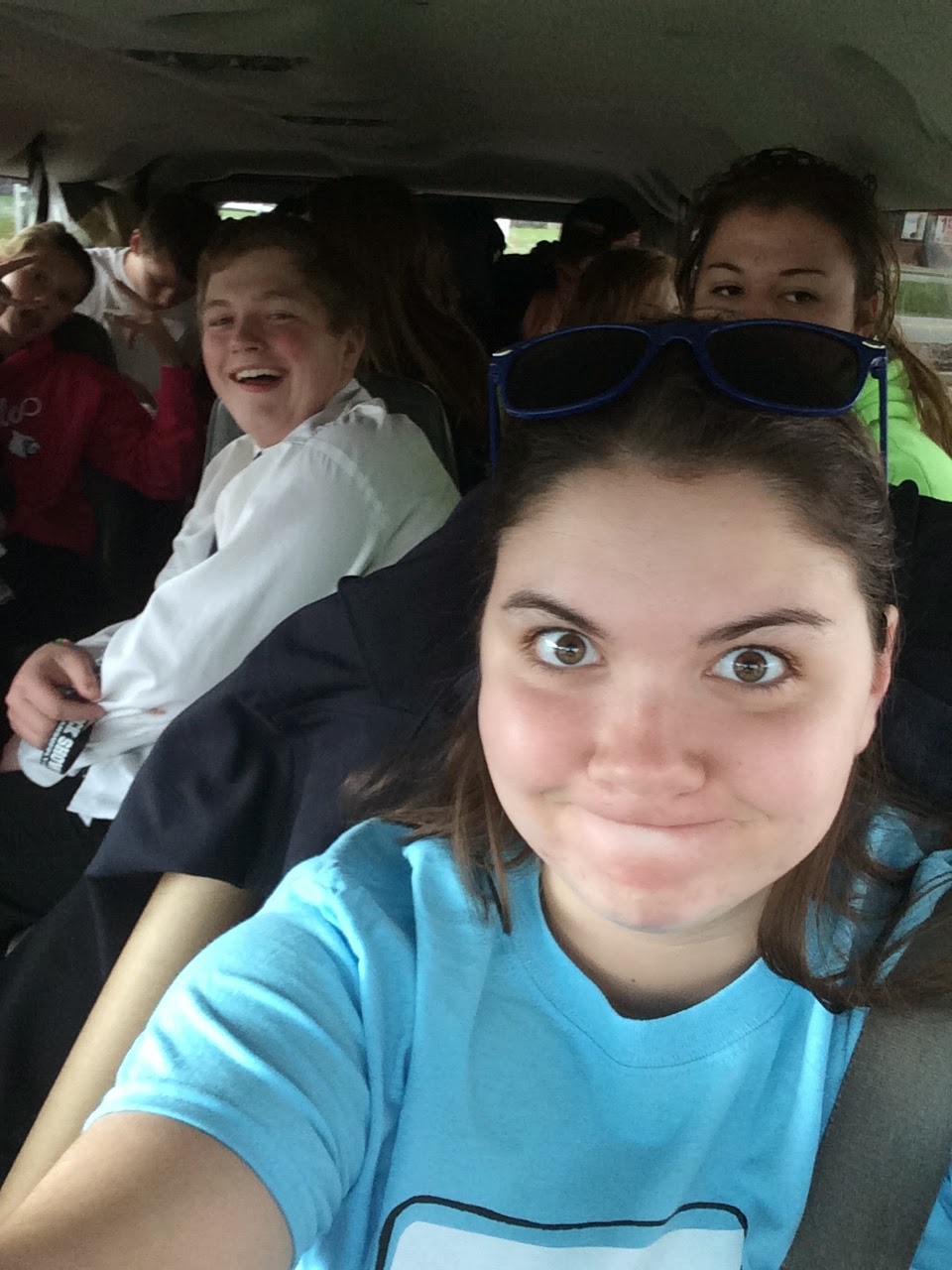
Gettin Ready to head home; my Face says it all

3.) The ride home
 The ride home didn't take us 12 hours thankfully it only ended up being like 8 which is a lot better. My confidence with driving had also improved ten fold, which is now something I can add to the list of things I can do! I also had the "cool van" my kiddos recruited two new students to ride with us home and I really enjoyed getting to know these additional students as well. Now on the way home Mr.Honeycutt left us in the dust, so I had the chance to use my navigational skills and rely on my students to help us get home in one piece. I also had the chance to decide when we would stop for bathroom breaks and when I needed to tell them to hold on and we would stop soon (which was a stretch at times).

Over all National Convention was amazing and I wouldn't change anything expect for maybe the weather on the way home (my car was covered in snow). I had a blast at the sessions, walking around convention, participating in quiz bowl ( WE GOT 2nd!!!) and having the chance to just sit and unwind and play video games with the kiddos. I can't wait to have the chance to take my own chapter to National Convention and I have made this life goal...that one day I will be up there on that stage whether it be a National Officer or a National Star, one day I will be up there standing proud next to my student!

Thank you Mr. Honeycutt for giving me the chance to interact with your officers and students and for having faith in my abilities as a teacher candidate and giving me the opportunity to see what being an adviser is all about. Now there are a great many pictures that I have, I'll only share a few, but you can check out more on my instagram account and twitter!


Monday, November 3, 2014

How do you Inquire?

Inquiry based learning is such an important topic that we need to be focusing on in the classroom. I will be honest that I did not know much about the subject until this week. There are so many different aspects and avenues that go with inquiry based learning and with such a deep topic it is hard to focus in on what is the biggest take aways.

"Inquiry based learning is a process in which students answer research questions through data analysis"


Myth Busters:
    • Students can not use data that they did not collect; inquiry can happen with data collected by other sources 
    • All inquiry is equal; there are 3 levels of inquiry identified by Schwab Herron, more recently a 4 level model has been developed.  

Fun Facts:
    •  You don't have to give students the questions; you let students discover the questions for the problem at hand
    • The complexity of the inquiry activity can vary depending on  how open the class is
    • Curiosity of students and the method can enhance the development of critical thinking skills as the students are learning about science
    • The 5 steps of inquiry based learning are questions, investigation, using evidence, connecting evidence, and sharing findings. 


So what do you need to know about inquiry based learning? Well, you need to know the importance this teaching technique can play in your classroom. You also need to understand how to apply the technique as well as how you can implement it into your classroom to bring it to your fullest advantage. You also need to stress the importance to your administration and parents, with their support you can apply this wonderful teaching tool into your classroom. 


There are so many resources out there to better understand inquiry based learning and teaching, and sometimes a picture is worth a thousand words...National FFA has a lot of resources out there!


Monday, October 27, 2014

National Convention: the first time outside of the jacket

Words can not describe how excited I am to be traveling to Kentucky tomorrow! Not only do I love the city, the atmosphere and the energy but getting to really know the students is what I look forward the most. Nothing like bonding on an 8 hour van ride to really meet your future students.

What really sunk into me that I am no longer a FFA member was when I started to pack and I didn't need the iconic blue corduroy jacket, it just has taken me by surprise how old I have become...I am no longer wearing the jacket I am supporting the jacket now. And after this week I will experience how amazing that is. 

Being a chaperon isn't new to me, a few weeks ago I got to experience what it's like on the other side of the table and to be honest it wasn't as bad as I thought it would be. I was afraid I wouldn't know where I fit but I quickly found my place and my role became clear. 

Finding my role is what I think I will struggle with the most. I feel like a student still and I am pretty sure that I look like one too so how do I make myself stand out and define my role as a student teacher? I know by dressing a few steps up places me higher yet at the same time I feel no matter how professional I dress I still look like one of those high schoolers I am responsible for. I know I am going to struggle defining my role the most however, I know that once I gain respect and I act and portray myself as the adult that I am others will see that I am not the high schooler but the advisor. 

Once I get to know the students better I believe the transition into the classroom will be so much smoother. I got to spend the whole day in the classroom today and it was great getting to talk to the students about what I had planed for the spring as well as how excited we were to travel to Kentucky. I can't wait to get into the room in January and I am confident that building respect with these core 13 students will allow me to enter the classroom with some student support. 

Tomorrow will be a new day and the beginning of a new chapter for me. I am looking forward to the experience and I know its gonna be a great week. The ride may be long at times, but I know our sing-a-longs will be on point and the bonding will be deep. National Convention has always had this amazing power to bring up my sprits and remind me why I am here today. I know after this convention everything I think I knew about convention will change. Last year getting my American degree I thought that was the best experience I would have at National Convention, but I think this week will top that experience. 

Best of luck to Albion's own Shannon Copeland on her quest to represent Pennsylvania and the Albion FFA as the national officer candidate from Pennsylvania. 

So much excitement is only hours away, and here I am in my sister's dorm room blogging away and doing last minute packing for tomorrow. 6 am is going to be here quicker than I know.

Heres to a wonderful week with an amazing FFA chapter, an exceptional advisor, and a strong group of students who have personalities unlike any I have ever known. Thank you for giving me this experience and I know it will be the best it can be! 

See ya'll in Louisville! Safe travels and good luck to all those competing! 

Make sure you check out everything I will be up to on twitter @rachie12rach and on instagram! 

Sunday, October 19, 2014

Rubrics in your lab: How do they fit?

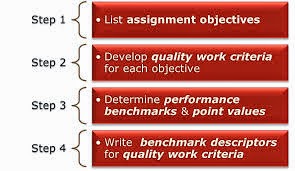
This week I got to read a little more about rubrics and how to grade laboratory classes as well as how to grade exceptional learners. I found these topics really helpful because in a few of my units I plan on presenting rubrics to grade unit projects. It was really helpful to learn there are more than a few different types of rubrics
  • generic 
  • task specific
Each of these two types can be broken down into two more subcategories
  • analytic
  • holistic 


 As a future teacher I think its important to use rubrics that are useful for me as well as my students. One way it was suggested to me is to have students at the beginning identify what are the key components they feel they should be graded on as well as what weight each should hold. In the end the teacher makes the final call but I think this is a great way to have students realize what they need to work on in their projects and what holds the most importance with their learning.


When grading students you will always have exceptional learners, and its important to modify what you present to make sure they are gaining something from you lesson. Grading systems must be high quality using standards with product criteria which addresses finals and proficiency, process their level of achievement and demonstrate the progress made what learning is gained and the value to that learning,.

When working in the laboratory setting its important to try and evaluate learners in ways other than tests and quizzes because you may not be actually testing what they have learned. Some ways to achieve this are through mind maps, rubrics and vee maps. Each area has benefits and downfalls and can be used for pre-assessment to map the progress of students, they can return to their maps after the end of the unit to add what they have learned.

Sunday, October 12, 2014

Preparing our students for the real-world

"If we wish to prepare a generation of students who can solve real-world problems, we must give them real-world problems to solve"


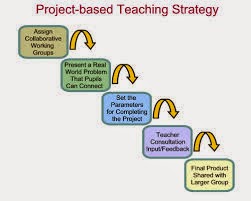
Today it can be seen as hard to meet the needs of each and every students, it can also be said that we are not doing enough to prepare our students to take on the world. One way we can fix this is by using more project based learning. Do you know what project based learning is? It can be defined as students learning new material through a project, not students reviewing material to create a  project. The difference between projects and project based learning is sometimes gray but we can help define this line as well as help our students see the clear difference and the advantages of project based learning.

Edutopia is one of my favorite sites hands down, they honestly have a blog and post about everything education! Here they talk about project based learning through a school's farm, students manage the animals and decided what actions to take based on what is actually happening to their farm! Now these students are training to become farmers, they are training to become problem solvers- so a fence breaks how do we pay to repair it, do we do the labor? 

Its very important that as leaders in our field of agricultural education we emphasize them importance of project based learning. We can do this through many ways shapes and forms and the possibilities are endless...now you may ask why is project based learning so important that I am writing a blog about it, well here are the facts 
  • Students often find school as boring- here is a new way to engage them
  • Student remember more by researching the project, working on it, completing it and than presenting it
  • The 21st century workplace requires more than just spitting out facts, it requires its workers to be handed a problem and than solve it
  • Students are able to take knowledge to the next level, by developing the skills used in project based learning they can apply those skills to other areas other than the classroom
  • Modern technology is often a key role in project based learning
  • Teacher are better able to work one-on-one with students and give the proper amount of attention needed
 There are many types of problems we can give students to solve, and other teaching techniques play a role in project based learning as well including scaffolding. It is important to remember not to give the student to much so that he or she is overwhelmed and  discouraged but at the same time you need to challenge the minds of your students. There are three types of structure for problems ranging from well structured to ill structured  I belive it is important to only provided well structure problems.

Its important to remember not to use projects as desert but use project based learning as the main course 


Thursday, October 9, 2014

Students, Money and Responsibility

What do these 3 things have in common?

Lets take a moment to think about these three topics: 


  • Students, we know what those are...the tiny (most of the time) people looking up at us with bright eyes (sometimes hidden by eye lids) eager to learn (for the most part) about what ever the state deems fit (not always the most valuable lessons) you teach.
  • Money, the green stuff that makes the world go round and pays us to teach said students.
  • Responsibility, something we believe we all have including said students (well we sure hope so) to get up and go to work every day.

Now the connection between these 3 things may becoming more clear now but if not let me fill you in on what this blog is really about.

FINANCIAL LITERACY

Yep I said it we need to learn how to become financially responsible and we need to be teaching these skills to students. How else do we expect them to get through college? I mean we surely shouldn't leave all this on the parents to teach their kids, or on the student to figure out on their own through failures. Because that is what we are setting students up for; failure, failure to understand what a loan is, what a grant is, how to budget money, how to write a check, and how credit cards work. 
Now this is a lot to take in and you would think schools would be teaching this, but they aren't. Here is a chance for agricultural education to step in and help out those students who we care oh so much about! 

Most of us may think that oh we do SAEs students know how to budget, but do they really? It's quite different budgeting money that isn't really yours. Sure you sold your cow and used that money to buy a few more cows, but what about the feed for those new cows? You live on a farm so you put down how much it costs but you really don't need to budget for that cost. See where I am getting at? We may think we got the skills down on how to make a budget but we really don't fully understand. 

How can we fix this problem? Well there are many ways to address the issue and HELP our students, our future workers, the next generation. 

There are so many resources out there on how to teach these different topics, there are lessons already written, and we have the chance to make this happen. SO what do we focus on? Coming from the stand point of I didn't know how to write a check (yeah I know I should have learned when I got my first check book). I learned the hard way, I sent in a check and guess what it came back because I didn't do it right...I learned but it would have been so much better for me if I learned in High School so I didn't enter college a complete fool.

Another skill we need to focus on is the difference between loans, grants, and scholarships. Because I still don't know all the definitions and I'm about ready to graduate. Now it would have been awesome if I could have had the chance to learn in high school so I was better prepared to pay for college. Next we need to talk about credit and how it works. We need to understand that credit can make or break you. I still don't have a credit card because I don't feel comfortable having one. I know I need one to buy a car or buy a house but how do I start credit? Now I think if I had training in high school I would be a confident young adult.


I think I understand being financially responsible but based on what I know about everything else with financial literacy I'm probably not...sadly. So how can students work on budget? Well we can have them do their SAE, true, but that's not "real" money all the time. Sadly I don't know of a great way to do this? Maybe use class "money" which isn't "real" but use this money to buy homework passes, get points, earn money by doing extra work, invest in credit, invest in projects. Wow this might be something? Is going to FFA events work?  Can I get paid to have fun? YES! (teach ag) 


From what I have gathered there are a lot of resources out there... Here are just a few I found helpful and want to save for when I get into my own classroom. 
There are also a great amount of videos out there 
Like this one!  an online game? Now I think students would like this! It brings up a lot of good talking points and shows the value of money.

http://www.financialeducatorscouncil.org/financial-literacy-students/

http://www.cfs.wisc.edu/briefs/cfs_research_brief_2012-5.2.pdf

http://www.edutopia.org/blog/high-school-financial-literacy-resources-brian-page

http://www.bbt.com/bbtdotcom/financial-education/planning/financial-literacy.page


Now I'm asking you for help! Please help me teach my students how to be financially confident and literate. Help me help our future generations!

Wednesday, October 8, 2014

Community Gardens; why should you care?


A community garden can be just about anything, a few tomato plants you have in raised flower beds all the way to a large garden full of different fruits and vegetables. Now you may ask why should your FFA chapter create one? Well the list goes on and on with the benefits of a garden in your community here are just a few

  • Allows the community to work with your students
  • Hands on Experience  
  • Gain connections through out the community
  • A chance for a service learning project where students can continuously give back and enhance their communities
  • It gives your program publicity and a chance to showcase what your students can do
  • A garden helps teach nutritional values, not only do community members get a chance to consume fresh food, your students have the opportunity to  use this interaction as a teachable moment to show why its important to eat fresh fruits and vegetables 
  • An opportunity to teach students about landscaping, farming techniques, as well as the chance to show students how to use what they have to make what they want
  • A community garden gives not only your students a sense of ownership but it also gives that same thing to your community members that help take care of it or use it.
     
    Did you know it is proven that community gardens reduce crime rates that statistic has a large impact on me! 
Community gardens have so many benefits for not only your students, classroom, community, and school. Why would you let this chance slip away?

Now if you think wow community gardens cost a lot to start up...don't you fret if you are an FFA chapter you have the chance to apply for the Food For All Grant through National FFA 


For more information don't hesitate to turn to your local extension program for help getting a garden started or help maintaining one.

For a chance to talk more about community gardens come check out Genius Hour here at Penn State in Ferguson 214 @ 8am! Or to follow up away from campus be sure to check out my tweets using #TeachAgGenius